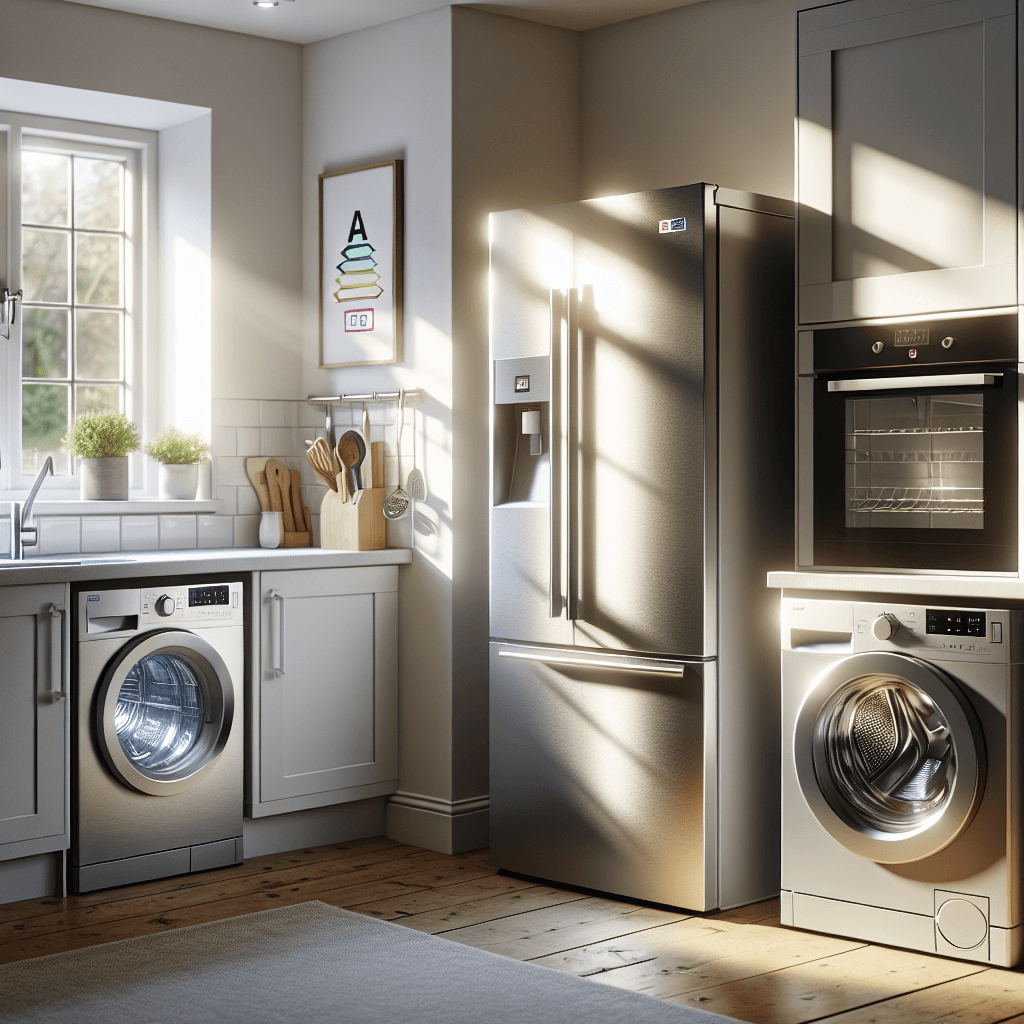
Why efficient appliances matter
In the electronics and appliances category, choosing the right fridge freezer, dishwasher, cooker, or laundry machine has a direct impact on day‑to‑day comfort, household running costs, and sustainability goals. Today’s appliances are more sophisticated than ever, pairing advanced motors, compressors, and heat pump technology with smart features that help you fine‑tune performance. But with so many models, specifications, and badges in play, identifying the best fit for your space and routine can feel overwhelming. UK shoppers also have the added layer of updated efficiency labelling (A–G) to interpret, and that shift alone can make older reviews or energy assumptions less comparable to newer models. For most households, the key challenge is balancing practical needs—capacity, dimensions, and noise—with efficiency, reliability, and total ownership considerations. A compact kitchen might demand a slimline dishwasher or a 55 cm‑wide fridge, while a growing family could prioritise a larger-capacity washer and a frost‑free fridge freezer to keep weekly routines smooth. Open‑plan living turns noise levels (measured in decibels) into a make‑or‑break factor. Flat dwellers weigh condenser or heat pump dryers where venting isn’t possible, and home bakers may prefer fan ovens or catalytic liners for easier clean‑up. On top of this, local water hardness can influence dishwasher performance and limescale build‑up, while older properties may have electrical or plumbing limitations that affect installation options. A structured approach can simplify the process. Start by mapping your must‑haves, such as installation type (freestanding vs. integrated), door swing and hinge orientation, counter depth, usable storage layout in the fridge, or wash programmes you’ll actually use. Then, compare efficiency ratings and noise figures within your shortlist, rather than across the entire market, so you’re not mixing incomparable sizes or technologies. Many UK shoppers like to browse a wide range online to understand the trade‑offs at different price points, and retailers such as appliancesdirect.co.uk make it easier to scan specifications side by side and spot models that align with your space and usage patterns. With the right plan and a clear set of priorities, you can zero in on appliances that are efficient, quiet, and appropriately sized—without paying for features you won’t use.
Key features and standards
When evaluating efficiency, the current UK energy label ranks products from A (most efficient) to G, with a QR code linking to the EPREL database for standardised specifications. Because recent test methods are stricter than older scales, an appliance rated B today can outperform a past A+++ model, so focus on like‑for‑like, current labels. For fridge freezers, look at the rating alongside annual kWh and practical storage: usable (net) capacity, shelf adjustability, salad crisper design, and whether doors can be reversed. Frost‑free systems reduce manual defrosting in freezers, supporting consistent performance. Laundry decisions hinge on drum size, spin speed, and programme flexibility. A 7–9 kg washing machine is often sufficient for many households, but consider actual load habits and fabric care. Higher spin speeds can extract more water, potentially shortening dryer time, while inverter motors typically help reduce noise. Heat pump tumble dryers use lower temperatures than condenser types, which can be gentler on fabrics and typically more efficient, though cycles may be longer. Check noise ratings if your laundry sits near living spaces, and review filter access and maintenance steps so ongoing upkeep stays manageable. For cooking, induction hobs heat quickly and offer precise control with flat, easy‑to‑clean surfaces. Electric ovens with fan assistance distribute heat evenly, and self‑cleaning technologies—catalytic liners or pyrolytic cycles—reduce manual scrubbing. Consider cavity size and shelf configurations to match your baking trays or roasting tins. Dishwashers with variable spray zones, adjustable racks, and dedicated cutlery drawers can improve loading flexibility. Pay attention to programme durations and eco cycles, plus noise if your kitchen is part of an open‑plan area. Installation details matter as much as product specs. Measure the width, height, and depth of your alcoves and account for ventilation clearances, door thickness, and the arc of doors or drawers when opened. For integrated appliances, check hinge type (fixed vs. sliding) and cabinet compatibility. Electrical requirements vary: some hobs and ovens need hardwiring, while others plug into a standard socket. Plumbing for washing machines and dishwashers needs accessible water and waste connections, and American‑style fridge freezers with plumbed ice/water dispensers require proper routing. Online filters and comparison tools at retailers can speed this matching process; for example, you can explore offers by capacity, noise level, or fitting type to create a shortlist tailored to your space and routine.
Smart shopping and setup steps
Turn your shortlist into an informed purchase with a few practical checks. First, confirm the appliance fits your intended spot, then trace the access route from kerb to kitchen or utility room. Measure tight staircases, door frames, and hallway turns; appliances with larger depths or French doors may require extra clearance. If you’re replacing an integrated model, verify cabinet dimensions, hinge style, and door panel weight guidance to avoid misalignment or stress on fastenings. For laundry, ensure there’s space to open the door fully and remove filters for cleaning. For refrigeration, leave adequate ventilation as recommended by the manufacturer so the compressor can operate efficiently. Compare total cost of ownership rather than price alone. This includes delivery, optional installation, potential accessories (like stacking kits or filler panels), and any removal service for your old unit under WEEE guidelines. Read warranty terms carefully; understand what’s covered and how to register, and confirm service contact details. If you live in a hard‑water area, plan for dishwasher salt and periodic descaling for kettles and washing machines. Check that drain filters and lint filters are easily accessible to keep performance consistent over time. Once installed, take a few minutes to tailor default settings. Many appliances include eco or low‑temperature programmes that can reduce energy use over time. Fridges often perform best when not overfilled and when set to recommended temperatures; allow warm groceries to cool before placing them inside where possible. Balancing washing machine loads can reduce vibration and noise, and cleaning door seals, detergent drawers, and filters supports efficiency and hygiene. In the kitchen, cookware with flat, appropriately sized bases improves induction hob responsiveness. Finally, save model numbers, serial numbers, and digital manuals in one place so maintenance and part searches are straightforward later. If you prefer browsing a wide selection for cross‑checking specifications, retailers like appliancesdirect.co.uk offer filtering by energy label, size, and features; you can also learn more about installation options and services to simplify the handover from delivery to first use. A deliberate, step‑by‑step approach—from measuring and feature prioritisation to setup and ongoing care—helps ensure your new appliance integrates smoothly into your home and routine.
Final thoughts and recap
Choosing energy‑efficient appliances becomes much simpler when you organise the process around your household’s actual routines, available space, and installation realities. Start by clarifying must‑haves—capacity, fitting type, and noise thresholds—then compare models on the current A–G label to keep evaluations like‑for‑like. For kitchens, consider layout, door swing, ventilation, and the practicality of racks or shelves; for laundry, match drum size, spin speed, and maintenance access to how you wash and dry week to week. Heat pump dryers, inverter motors, and induction hobs reflect broader advances that can support lower energy use over time, while eco programmes and thoughtful day‑to‑day habits further enhance efficiency. Revisit the total journey from delivery route to setup, registration, and basic upkeep, so there are no surprises on installation day. Keep your manuals and model details handy to streamline any future service queries. With these steps, you can confidently shortlist and select appliances that are balanced for performance, efficiency, and fit. When you’re ready to compare a broad mix of options and specifications, retailers such as appliancesdirect.co.uk provide a useful view of the market, helping you turn careful research into a well‑matched purchase for your home.